Étiquette : Construction

  • Synthetic vs Felt Roofing Underlayment: Pros and Cons

    Synthetic vs Felt Roofing Underlayment: Pros and Cons

    The underlay

    When most people think of roofs, they usually think of shingles or metal roofs. But what some may not know is that there is another layer of protection directly on the roof terrace and under the roof covering that plays a vital role in protecting your home from damage. by humidity. This is called the roof underlayment.

    What is a roofing underlayment?

    The roof underlayment is what sits between the shingles and the roof sheathing, or roof deck, which is typically plywood or OSB. It is installed directly to the roof deck and provides a secondary layer of protection against the elements, including rain, snow and wind.

    Types of roofing underlayment

    There are two main types of roofing underlayments:

    Felt or synthetic?

    Each product has its pros and cons, and the type you choose may depend on your geographic location, roofing materials used, roof design, budget, and what your roofing contractor may suggest.

    • The felt underlay

    • The synthetic underlay

    nFelt roofing underlayment

    Felt roofing underlayment is the oldest underlayment on the market. It is created by saturating paper or fiberglass mat with asphalt.

    Felt roofing underlayment is generally available in two types: # 15 felt and # 30 felt. Compared to # 15 Felt, # 30 Felt is generally thicker, stronger, and may be less likely to tear during installation or weather events.

    Advantages

    The main advantage of using a felt roofing underlayment is its cost. Felt underlayment tends to cost less than synthetic underlayment, which is why it is often the go-to solution for budget-conscious homeowners.

    The inconvenients

    There are several disadvantages to using a felt underlay on your roof. A downside to traditional felt roofing underlayment is that it generally cannot be left exposed for more than a few hours. Material may dry out or leach oils from heat. This would impact the ability of the felt to protect against moisture.

    Other disadvantages of the felt underlayment include:

    • Prone to tear in high winds and during installation.
    • If exposed to moisture, the carpet can absorb water and wrinkle the felt, making it more difficult to lay the shingles flat. Therefore, shingles should be installed immediately after installing the felt underlayment to ensure optimum protection.
    • The felt underlay also weighs more, which can make it more difficult to install.
    • The felt underlay a slippery surface, which can sometimes make installation more difficult.
    • The weight also leads to less material per roll. This means more potential seams instead of just one piece.

    Synthetic roof underlayment

    For better water resistance and protection from the elements, many roofers choose the synthetic underlayment. These products are generally made from durable polymers, which provide increased strength and longevity. This type of underlayment is generally resistant to moisture and, when installed correctly, provides better weather protection than felt.

    Synthetic materials are not standardized, so different manufacturers may manufacture their products differently and therefore may have different levels of performance. Make sure you do your research and talk to a trusted contractor who can help you choose the right roofing materials to protect your home.

    Advantages

    There are four main advantages of installing synthetic roofing underlayment over felt. Compared to felt, the synthetic roof underlayment is:

    • Sustainable
    • Quick to install
    • Safe
    • Repels water

    The synthetic underlay has a sturdy and durable construction with extremely high tear resistance compared to felt.

    Synthetic roofing underlayment is extremely durable. It does not generally tear and is suitable for prolonged UV exposure and humidity in some cases, which is especially useful if there is a bit of time before your roof covering is installed.

    Synthetic underlayment also resists start-up traffic, which is important when your roofing contractor walks over its surface during installation.

    Synthetic roofing underlayment also tends to be:

    • Lighter! Up to four times lighter in some cases
    • Quick to install! Because there is more material per roll than felt (synthetic roofing underlayment is available in wider and longer rolls), it allows your roofers to climb fewer ladders, allowing them to save time and perhaps speed up the work. For example, a typical 2,700 square foot home may require three rolls of synthetic underlayment versus 14 rolls of No. 30 felt to cover the same area.
    • Sure ! The synthetic underlay is also advantageous for the safety of the workers – This underlay, has a variety of non-slip surfaces for better accessibility on foot. It is also generally well marked with overlap guides and indicators of where fasteners should be placed, which helps improve consistency and accuracy during installation.
    • Moisture resistant! Where felt products tend to absorb water, synthetic roofing underlayments are designed to repel water. This is important for homeowners concerned about moisture infiltration, especially if they plan to leave the underlayment exposed for an extended period of time.

    Because it’s made of plastic, synthetic underlayment is generally resistant to mold growth, a definite advantage over felt.

    The inconvenients

    Compared to felt, the main disadvantage of synthetic roofing underlayment is its cost. The initial investment in better quality roofing materials is much higher than felt, however, it could save you money in the long run!

    The right underlay for your roof

    Whether you are embarking on a roof repair project or building a new home, there are many factors to consider when it comes to what type of underlayment to use. Synthetic roofing underlayment has many advantages over felt and can be a worthwhile investment to protect your roof and home from the risk of water and moisture infiltration.
  • Top 3 Ways to Improve Your Roof’s Energy Efficiency

    Top 3 Ways to Improve Your Roof’s Energy Efficiency

    Improve attic insulation

    A relatively simple and inexpensive way to make your roof more energy efficient is to make sure you have adequate insulation.

    Poorly insulated attics don’t provide a home with the protection it needs to fight extreme temperatures and reduce energy costs. This is especially true for older homes, which normally have less insulation than newly built homes.

    While adding new insulation to a poorly insulated attic has some benefits, it is important to know the optimal amount and type of insulation to use.

    • Cooling roof coating

    • Replacement of shingles

    • Energy efficient roofing materials

    Cooling roof coating

    Another method of increasing the energy efficiency of your roof is to add a coating or cooling material to the roof.

    Anyone who has worn black in the summer sun knows the impact dark colors have on heat retention. The same principle applies to your roof: the darker the roof, the more heat is retained. A qualified roofer can apply a coating to the roof, such as cold paint, to reduce heat retention.

    Coating your roof can reduce thermal energy costs and increase UV protection and waterproofing, in addition to other benefits, such as extending the life of your roof.

    Replacement of shingles

    Replacing aging shingles can also offer increased protection from the sun. With many cooling options available, with each home requiring a specific solution, homeowners should schedule a roof inspection with a roofing contractor before deciding on the best cooling strategy to use.

    Energy efficient roofing materials

    While adding roof insulation and cooling materials are inexpensive and easy options that can greatly improve the energy efficiency of your roof, sometimes you will be left with roof replacement as the only option. When adding a new roof to your home, energy efficiency should be a major factor in your decision.

    There are a number of energy efficient roofing materials available. For example, metal roofing, although initially more expensive than shingles, provides significant savings on energy bills over the life of its lifespan. Proper installation is essential, so contact an experienced roofing contractor for advice.

  • How to beat the heat this summer?

    How to beat the heat this summer?

    Extreme summer temperatures heat & roofs

    Not all roofs are created equal, and this is especially true when it comes to controlling extreme summer temperatures.

    With summers getting hotter in many parts of Canada, understanding how a roof behaves is critical to keeping homes cool while maximizing energy savings. Choosing the right materials, coatings, and roof installation methods makes a major difference to increased durability and comfort.

    Research indicates that homeowners can save up to 40% on annual energy costs by simply selecting the right type of roof and using good installation practices.

    Roofs increase heat protection

    To understand how roofs can increase efficiency by protecting themselves from the sun’s energy, it is important to understand the different types of solar rays, which are divided into UV, visible, and infrared. Infrared rays that are not visible make up the vast majority and produce heat. UV rays, which are not visible, cannot be felt, but can cause wear and tear on building materials and visible rays make up the rest.

    Although even basic unpainted metal roofs reflect more sunlight than asphalt roofs, by choosing the right colors and coatings, low-glare metal roofs reflect most of the non-visible infrared and UV rays.

    The heat-producing rays are the most damaging and emit up to 85% of solar heat gain to help keep homes cooler. Also, dark colored metal roofs can help lower the temperature of the house during hot periods.

    Thermal emissivity, Sun and heat reflection

    Additionally, many cold metal roofs are ENERGY STAR qualified based on the properties of total solar reflectance and thermal emissivity, a term that describes how much energy a material absorbs is released and emitted into the atmosphere (e.g. opposition to the increase in interior temperatures). In short, the Environmental Protection Agency estimates that an ENERGY STAR labeled roof can lower its temperature by up to 100 degrees Fahrenheit.

    How to beat the heat this summer?
    How to beat the heat this summer?

    Other tips to ensure that a new roof will offer protection against extreme heat, maximum energy savings and long-term satisfaction:

    • Pay attention to air circulation and ventilation, two essential elements in all seasons. Good ventilation systems help keep roof temperatures constant.
    • Check building codes to make sure your insulation meets or exceeds standards.
    • Take into account other potential threats; areas that experience extreme heat are also often subject to forest fire danger. Many quality metal roofing systems are fire rated Class A, the industry’s best for fire resistance.
    • Use quality materials from a reputable manufacturer that offers guarantees.
    • Choose the most durable material possible to help increase energy efficiency while reducing waste. Metal roofs save energy, can last up to three times longer than other materials, and are 100% recyclable at the end of their long lifespan.

    Ultimately, choosing the right roof has a big impact on a homeowner’s budget and bottom line. When it comes to comfort, convenience and year round performance, quality metal roofs simply make more sense and are more durable.

  • Three advantages of “going green” when it comes to roofing.

    Three advantages of “going green” when it comes to roofing.

    Roofing-Go green!

    Save the planet. Reduce, reuse, recycle. When you hear these phrases, you usually think of the surroundings. However, when it comes to building ecologically using greener building materials for roofs, families can not only benefit the environment, but can also increase the comfort of their homes, support the health of their families. their families and significantly reduce costs.

    Greening the environment and the roof?

    Across the country, we need to start making a difference to help our planet and the homes we live in. Here are three reasons why entrepreneurs should consider giving their clients a green option.

    Three advantages of “going green” when it comes to roofing.
    Three advantages of “going green” when it comes to roofing.

    Roofing – Environmental benefits

    Our environment can be deeply impacted by construction methods, materials and operations. Most often, this impact is negative. Shingles can clog landfills and adversely affect air and water quality; building materials such as aluminum, concrete and steel are responsible for excess CO2 emissions; and pollution of water, air and soil can accumulate due to the accumulation of wastes.

    Entrepreneurs must be responsible. When they build ecologically, they protect and enhance ecosystems and biodiversity. We can do this by using recyclable materials in our products, shingles and other components. Regarding installation, it is essential to read the manufacturers recommendations for each product installed.

    Sustainable manufacturing is CertainTeed

    One of the most valuable players in the sustainable manufacturing industry is CertainTeed. The company not only recycles the majority of internal waste created by manufacturing (90% is turned into asphalt material for road construction), but it is also continuously developing new products, systems and solutions to reduce the footprint. carbon and improve energy efficiency.

    Products such as their CoolStar® are designed with solar reflective surfaces to reduce CO2 emissions and energy consumption. Partnering with an eco-friendly manufacturer is essential to propel our communities and our world forward.

    Health benefits

    One of the biggest benefits of green building is the increased health benefits. A “green” roof will use environmentally friendly building materials that improve the air quality of homes, in addition to increasing thermal and acoustic quality. This means that utility systems will run less to maintain comfortable temperatures in the house.

    Overall, families will benefit from a higher level of comfort and health. While helping to protect the environment from further damage, homeowners will also improve the overall quality of life for their entire family.

    Economic benefits

    The economic profitability of a green roof is not always immediately noticeable, as many materials and installations of green materials cost more upfront. In the long run, however, homeowners can expect both to lower utility bills and to dramatically increase the value of their home when they do end up selling. Since most green building materials are of higher quality, they will last longer and provide more sustainable design, construction and operational practices.

    So, building green saves money in the long run, improves the overall health of everyone in a home, and of course helps the environment to heal.

  • Damage to shingle roofs ~ Roof Sealant from Spray Seal

    Damage to shingle roofs ~ Roof Sealant from Spray Seal

    Roof damage Prolonged exposure?

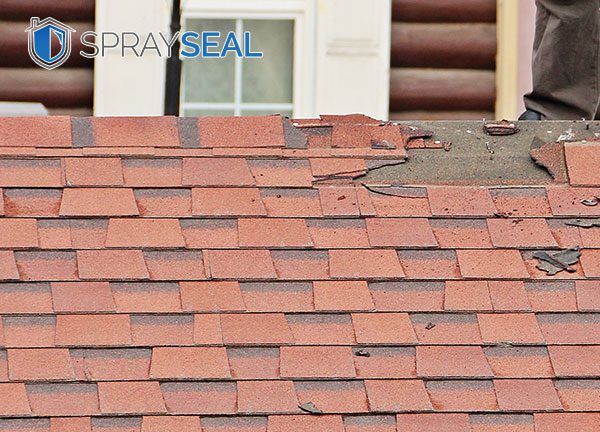
    Some things can be tough on your roofs. Prolonged exposure to weather and extreme temperatures can cause damage and lead to costly problems for your home or business.

    7 tips for repairs and prevention

    In this article, we’ve researched and listed 7 types of damage that can be done to shingles, along with prevention and treatment tips for each problem!

    • Blisters

    • Cracks (thermal)

    • Curling

    • suction cups

    • Chipping

    • Hail bruise

    • Manufacturing defect

    Gas migrates to the surface of the shingles

    Blisters: Blisters are caused by the expansion of volatile gases escaping from the asphalt layer. The gas migrates to the surface of the shingles, eventually causing erosion and blistering on the top.

    Prevention: Make sure your roof is well ventilated and that shingles are not installed over wet surfaces, such as wet felt or roof decking.

    Treatment: There is no way to stop the blisters once they start to occur. Eventually, the roof will need to be replaced. If the blisters are severe, where they open and expose the shingle mat, the shingle mat will need to be replaced immediately.

    Asphalt shingle mat drying out

    Cracks (thermal): Cracks are the result of the asphalt shingle mat drying out over time, causing the mat to shrink and the surface to crack. Shingles that exhibit this only a few years after installation may indicate a manufacturing defect in the shingle.

    Prevention: Cracks occur due to age and normal wear and tear, so they are difficult to prevent.

    Treatment: Cracks are very common on shingle roofs and are generally harmless. When shingles show craze cracks, they don’t necessarily need to be treated or replaced.

    Curling a possible damage to your roof

    Curling: Curling occurs when the shingles on your roof begin to lift and curl around the perimeter of the shingle.

    Prevention: Make sure your roof is properly ventilated. Roofs that have an extra layer installed on top of the pre-existing layer are more likely to roll up.

    Treatment: You can apply additional sealer to the underside of the shingles in the corner where the curling occurs to seal it to the roof surface.

    Other damage to shingle roofs

    Suction Cups: Suction cups occur when the shingles start to be concave from the middle, causing waves or suction cups in the appearance of the shingle. Suction cups are typically caused by age-related wear and tear on an asphalt or organic shingle roof.

    Prevention: Make sure your roof is well ventilated and that shingles are replaced when their life is exceeded.

    Treatment: When sucking occurs, it means it’s time to replace the roof

    Chipping: Chipping is the deterioration of the roof’s surface, which is usually caused by the weathering of the shingle due to extreme age.

    Prevention: Replace your roof when its life is over.

    Treatment: When chipping occurs, it is a sign that the roof should have been replaced, many years ago.

    Hail bruise: Hail bruise occurs when hailstones damage the surface and mat of the shingles, compromising the shingle’s water-draining ability.

    Prevention: Besides living in an area where hailstorms are less frequent, there is no way to prevent this type of damage.

    Treatment: Replace damaged shingles or the entire roof, depending on the extent of the damage. This type of roof damage is covered by most standard home insurance policies.

    Manufacturer’s Defect: A manufacturer’s defect is a problem caused during the manufacturing process that causes a defect in the shingle.

    Prevention: Unfortunately, this happens from time to time.

    Treatment: You can contact the shingle manufacturer for their defect handling policy. Some companies may be willing to pro-rate you for the life of the shingle if there is a warranty and it is covered by the manufacturer’s policy.

  • Safety and prevention

    Safety and prevention

    Safety and prevention

    Safety and Prevention To ensure that the season is not only busy, but long and successful for roofing contractors, they should start with an emphasis on safety. Thus, there are many ways to work safely on construction sites. Here are some key areas for roofing contractors to remember.

    Safety and prevention
    Safety and prevention
    • Stay safe at the top

    • Plan to manage the heat

    • Avoid exposure to asbestos

    Stay safe at the top

    Roofing, unlike many other trades, requires crews to work at significant heights. For professionals, it is necessary to take precautions in order to work safely on roofs. Even small roof repairs require hauling heavy tools and equipment up and down a ladder, often tens of feet high.

    To achieve this, roofing teams must be specially trained in tool handling techniques and fall safety, in fact, this is one of the main reasons homeowners are advised to avoid roofing. their own home.

    Fall hazards aside, roofing tools such as pneumatic nail guns, roofing-specific axes and knives have their own necessary precautions for safe use. For example, in addition to fall safety gear, many professionals wear protective gear, such as goggles, helmets, and earplugs, to prevent further accidents.

    Plan to manage the heat

    In addition to spending the day at high altitudes, roofing teams are also exposed to sharp increases in temperature during the summer months. For reference, testing of roofing shingle products has found that even in mild weather, at 20 ° C, roof temperatures can quickly exceed 48 ° C by noon.

    Exposure to extreme heat can lead to occupational illness and injury. Heat stress can lead to heat stroke, heat exhaustion, heat cramps, or rashes. Heat can also increase the risk of injury to workers, as it can lead to sweaty hands, foggy safety glasses, and dizziness.

    To work safely in high temperatures, professional roofers must have a plan in place, which includes best practices to avoid and mitigate exposure to extreme heat. Roofing crews, for example, can plan to start early and clean up before the day’s temperatures peak. They can also take several breaks per hour to drink water and maintain hydration while working out in the heat.

    Avoid exposure to asbestos

    Replacing roofs on older homes, as with other home improvement or remodeling projects, may present a risk of asbestos exposure. Prior to the 1970s, many types of building insulation products were made with asbestos for heat and fire resistance. Asbestos has also been widely publicized as a cause of mesothelioma cancer and other lung diseases.

    This condition can take 30 or 40 years to manifest before showing physical symptoms, so it is often too late to effectively treat the condition once it is diagnosed. Professional roofers must ensure that there is no risk of exposure to asbestos before opening a roof.